

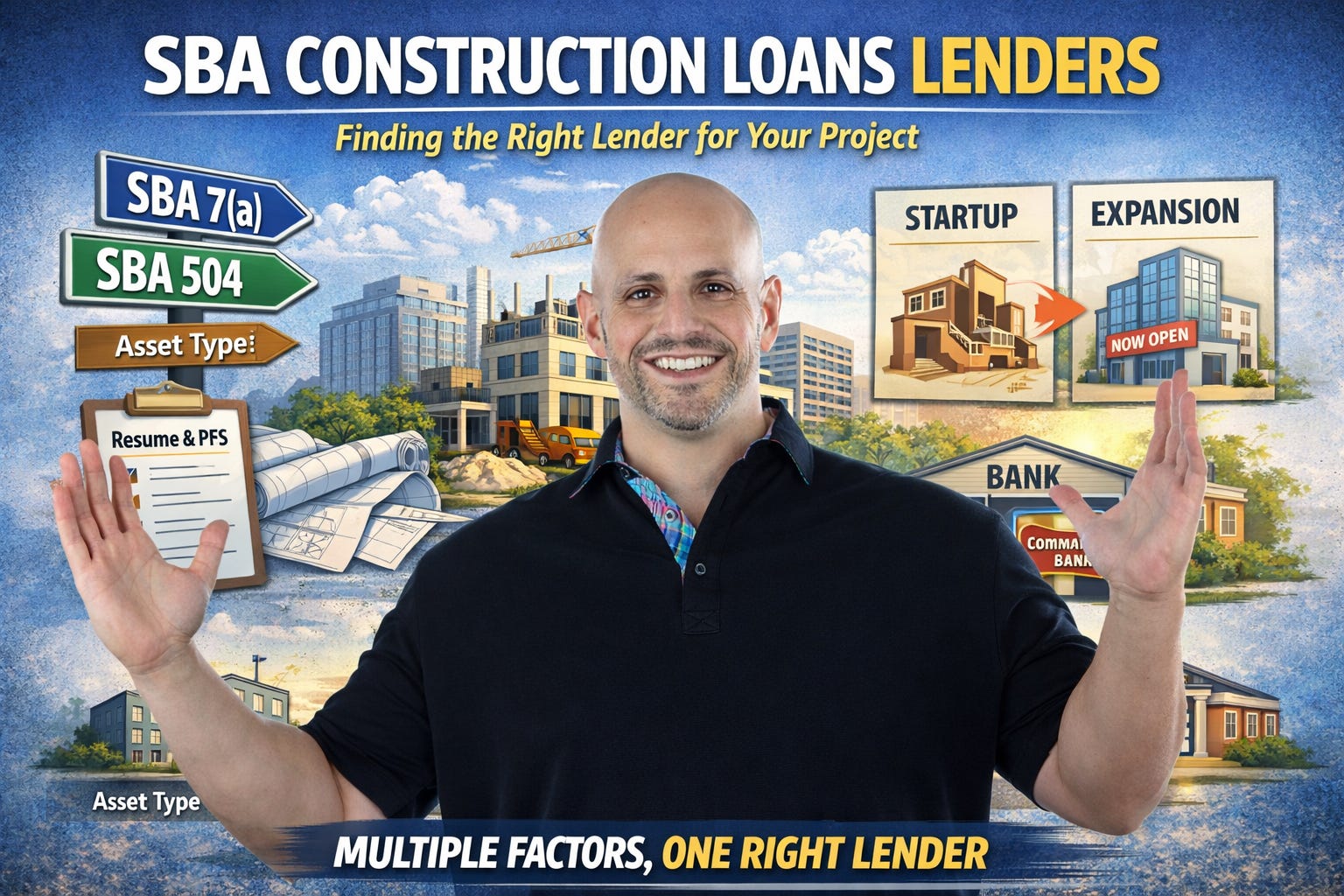
SBA construction loans are not one-size-fits-all. The right lender depends on multiple layered factors including asset type, whether an SBA 7(a) or SBA 504 structure is used, borrower financial strength (resume and personal financial statement), and whether the project is a startup or an expansion. Identifying the correct SBA construction loan lender is often the difference between approval and denial—and that’s where expert guidance matters most.
SBA Construction Loans: What They Are and How They Work
What is an SBA construction loan?
A government-backed loan used to build, renovate, or expand commercial real estate
Issued by banks and non-bank lenders
Guaranteed by the U.S. Small Business Administration
Can be structured as SBA 7(a) or SBA 504
Often converts to permanent financing after construction
In simple terms: SBA construction loans combine higher leverage, longer amortization, and flexible underwriting compared to conventional construction loans.
Why SBA Construction Financing Is So Attractive Right Now
Key reasons borrowers use SBA construction loans:
Lower down payments (often 10–15%)
Longer terms (up to 25 years on real estate)
Competitive interest rates
Ability to finance soft costs (architects, permits, engineering)
Permanent takeout built into the loan
For owner-occupied commercial real estate, SBA loans are often the only realistic way to build without bringing massive equity to the table.
SBA Construction Loans Lenders: Why “Best” Depends on Many Factors
Not all SBA lenders are created equal. In fact, many SBA lenders won’t touch construction at all.
It comes down to multiple layers:
Asset type
SBA 7(a) vs SBA 504
Borrower resume & experience
Personal Financial Statement (PFS)
Startup vs expansion
Loan size and complexity
Matching the project to the right lender is a strategic process—not a Google search.
Asset Type: The First Filter for SBA Construction Lenders
Common asset types SBA lenders may (or may not) finance:
Retail buildings
Medical offices
Warehouses and industrial
Hotels and hospitality
Self-storage
Car washes
Mixed-use properties
Important:
Some SBA construction loan lenders specialize narrowly. A lender that loves warehouses may completely avoid hospitality or mixed-use projects.
SBA 7(a) vs SBA 504 Construction Loans
SBA 7(a) Construction Loans
Best for flexibility and smaller-to-mid-sized projects
Up to ~$5 million
One loan, one lender
Can include:
Land
Construction
Equipment
Working capital
More flexible on use of proceeds
Slightly higher rates
SBA 504 Construction Loans
Best for larger real estate-heavy projects
Structure:
50% bank
40% CDC (SBA-backed debenture)
10% borrower equity (15% for startups or special-use)
Fixed-rate CDC portion
Lower long-term interest rate
Less flexible but cheaper capital
Key lender insight:
Some lenders only do 7(a). Others specialize in 504. Very few do both well.
Resume and Personal Financial Statement (PFS): Why They Matter More in Construction
Lenders heavily scrutinize:
Prior ownership experience
Construction or development background
Management depth
Liquidity and net worth
Global cash flow
Contingency reserves
Construction amplifies risk, so SBA construction loan lenders expect stronger borrower profiles than for stabilized property acquisitions.
Startup vs Expansion: A Major Lending Divide
Startup construction projects
Higher equity requirements
Fewer willing lenders
Strong resume is critical
SBA 504 often preferred
Conservative underwriting
Expansion or second-location projects
Easier approvals
More lender options
Prior operating history offsets risk
Better leverage and pricing
Many borrowers don’t realize they’re being declined simply because they’re talking to lenders that avoid startups entirely.
Larger Transactions & SBA Pari Passu Construction Financing
For projects exceeding standard SBA limits:
SBA pari passu structures may be used
SBA lender and conventional lender share collateral
Risk is split proportionally
Allows higher total project costs
Often used for:
Large hospitality
Industrial campuses
Multi-phase developments
Only experienced SBA construction loan lenders can structure these deals correctly.
Real-World Example: Why Lender Matching Matters
Scenario:
A business owner seeks $4.2M to build an owner-occupied industrial facility.
Local bank declines due to construction exposure
Online SBA lender declines due to asset type
Correct approach:
SBA 504 construction
Bank comfortable with industrial
CDC experienced in ground-up projects
Outcome: Approval—once the right lender was identified.
How We Help Borrowers Navigate SBA Construction Loans
Our role goes far beyond applications:
Identify the correct SBA loan structure
Match the project to lenders that actually do construction
Position resumes and PFS correctly
Navigate startup vs expansion risk
Coordinate SBA 7(a), SBA 504, or pari passu strategies
Prevent wasted time with the wrong banks
Finding the right SBA construction loan lender is a strategic process—and one mistake can cost months.
SBA Construction Loans Lenders: Final Thoughts
SBA construction financing is powerful, but only when structured correctly and placed with the right lender. Asset type, loan program, borrower profile, and project stage all matter—and ignoring any one of them can derail the deal.
If you’re planning a construction or expansion project, the smartest move isn’t applying everywhere—it’s working with professionals who know which SBA lenders say “yes” to which deals.
Call to Action
If you’re exploring an SBA construction loan and want to avoid dead ends, delays, and denials, get expert guidance upfront. The right lender match can save you time, money, and frustration—and dramatically increase your odds of approval.