

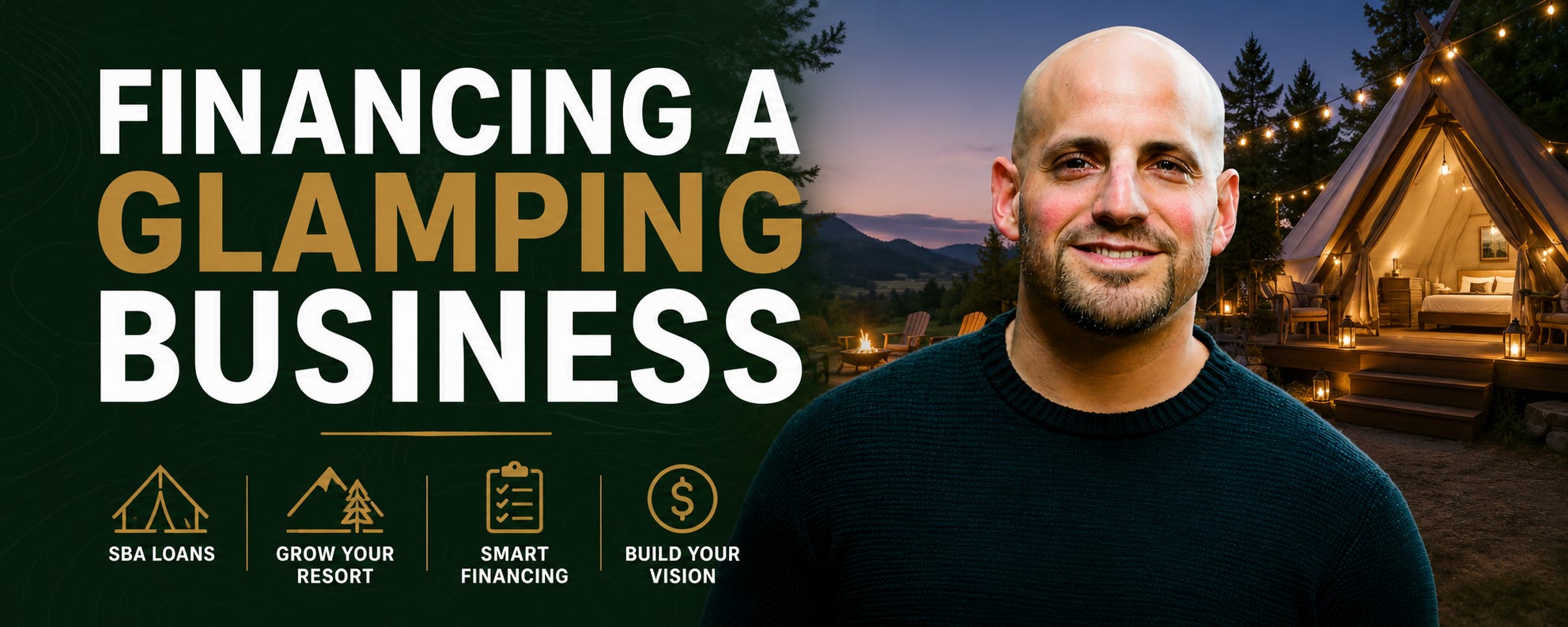
Starting or expanding a glamping business can be an excellent investment, but securing financing requires careful planning. SBA 7(a), SBA 504, and USDA Business & Industry (B&I) loans can finance land, construction, infrastructure, cabins, yurts, safari tents, furnishings, and working capital. The strongest borrowers demonstrate solid credit, adequate liquidity, industry knowledge, and a realistic business plan backed by sound financial projections.
As an SBA loan advisor, I’ve helped entrepreneurs finance a wide variety of hospitality and outdoor recreation projects. While every transaction is unique, lenders consistently evaluate the same core areas before approving financing. Understanding how they analyze your project can significantly improve your chances of approval.
Why Glamping Has Become an Attractive Lending Opportunity
Glamping has evolved from a niche travel trend into one of the fastest-growing segments of the outdoor hospitality industry. Travelers are increasingly looking for experiences that combine nature with modern comfort, and developers are responding with luxury tents, cabins, treehouses, geodesic domes, and upscale RV accommodations.
For lenders, well-planned glamping projects can present attractive financing opportunities because they often generate multiple revenue streams beyond overnight lodging, including:
Premium accommodations
RV sites
Food and beverage sales
Events and weddings
Equipment rentals
Retail merchandise
Recreational activities
However, lenders also recognize that startup projects involve construction risk, seasonal demand, and operational challenges. That’s why underwriting focuses just as much on the borrower as it does the property.
Which Loan Program Is Best for a Glamping Business?
Choosing the right financing depends on the size, location, and purpose of your project.
SBA 7(a) Loans
The SBA 7(a) program is the most flexible option for glamping businesses.
It can typically be used for:
Purchasing land
Acquiring an existing campground or glamping resort
Site improvements
Construction
Cabins, yurts, and safari tents
Furniture, fixtures, and equipment
Working capital
Refinancing eligible debt
For many startup operators, the SBA 7(a) loan offers the broadest range of eligible uses.
SBA 504 Loans
The SBA 504 program is designed primarily for owner-occupied commercial real estate and major fixed assets.
It is often a good fit when financing:
Permanent buildings
Bathhouses
Lodges
Clubhouses
Utility infrastructure
Roads
Long-term site improvements
Because SBA 504 financing generally carries fixed interest rates on a significant portion of the loan, it can be attractive for larger development projects.
USDA Business & Industry (B&I) Loans
If your project is located in an eligible rural area, a USDA B&I loan may provide another excellent financing solution.
These loans are frequently used for:
Larger hospitality developments
Rural tourism projects
Campgrounds
Outdoor recreation businesses
Loan amounts can exceed SBA lending limits in certain circumstances, making USDA financing particularly attractive for larger developments.
What Lenders Evaluate Before Approving a Glamping Loan
Many borrowers assume lenders focus primarily on the property.
In reality, they evaluate three separate components:
The borrower
The project
The market
Each must demonstrate a reasonable likelihood of long-term success.
Borrower Strength
Your personal financial profile is the foundation of most startup financing requests.
Lenders typically review:
Personal credit history
Cash available for the down payment
Remaining liquidity after closing
Personal financial statement
Tax returns
Existing debt obligations
Outside income sources
While every lender has different guidelines, borrowers with credit scores above 680 generally have more financing options.
Project Feasibility
Lenders also want confidence that the project itself makes financial sense.
That includes reviewing:
Construction budgets
Contractor estimates
Development timeline
Infrastructure costs
Permits and zoning
Utility availability
Environmental considerations
Contingency planning
One of the biggest mistakes developers make is underestimating infrastructure expenses. Roads, septic systems, wells, electrical service, drainage, and utility extensions can add hundreds of thousands of dollars to a project budget.
Accurate cost estimates reduce surprises during underwriting.
Market Demand
Even the best-designed resort can struggle in the wrong location.
Lenders want evidence that sufficient demand exists.
Helpful supporting information includes:
Local tourism statistics
Occupancy trends
Competitive analysis
Visitor demographics
State park traffic
National park visitation
Local attractions
Short-term rental demand
Demonstrating market demand helps validate projected occupancy and revenue assumptions.
Your Business Plan Matters More Than You Think
A business plan is far more than a document required for financing.
It tells lenders how you intend to build, operate, and grow your business.
An effective plan should include:
Executive summary
Ownership structure
Property description
Market analysis
Competitive advantages
Marketing strategy
Management team
Operations plan
Revenue model
Financial projections
Most importantly, the financial assumptions must be realistic.
Lenders are quick to identify projections based on unrealistic occupancy rates or nightly pricing.
Conservative assumptions generally create greater confidence during underwriting.
Don’t Overlook Post-Closing Liquidity
One of the most common reasons transactions become more difficult is insufficient cash after closing.
Many borrowers focus entirely on making the required down payment.
Lenders also want to know:
Can the business survive a delayed opening?
What happens if occupancy ramps up more slowly than expected?
Are funds available for unexpected repairs or weather events?
Maintaining adequate cash reserves after closing demonstrates financial strength and reduces overall lending risk.
Common Reasons Glamping Loans Get Declined
Many financing challenges can be avoided with proper preparation.
Some of the most common issues include:
Weak personal credit
Insufficient borrower liquidity
Unrealistic financial projections
Poor contractor estimates
Lack of hospitality or management experience
Incomplete business plans
Underestimating infrastructure costs
Limited contingency planning
Inadequate market research
Addressing these issues before applying often results in a smoother underwriting process.
How to Strengthen Your Loan Application
If you’re planning to finance a glamping project, taking the following steps before submitting an application can improve your chances of approval:
Review and improve your personal credit profile.
Document the source of your equity contribution.
Build sufficient cash reserves beyond the required down payment.
Obtain detailed contractor bids and development budgets.
Prepare realistic financial projections supported by market data.
Develop a comprehensive business plan.
Highlight transferable management or hospitality experience.
Work with professionals who understand SBA and USDA financing.
Preparation demonstrates to lenders that you’ve thoughtfully evaluated the risks involved in developing a successful outdoor hospitality business.
Final Thoughts
The glamping industry continues to grow as travelers seek memorable outdoor experiences with modern amenities. That growth has created exciting opportunities for entrepreneurs, but lenders still expect borrowers to present a well-planned, financially sound project.
Whether you’re purchasing land, developing a boutique glamping resort, expanding an existing campground, or acquiring an established outdoor hospitality business, financing success begins long before you submit a loan application.
Understanding how lenders evaluate borrower strength, project feasibility, market demand, liquidity, and financial projections can help you avoid unnecessary delays and position your project for approval.
If you’re considering financing a glamping business with an SBA 7(a), SBA 504, or USDA loan, working with an experienced loan advisor early in the process can help you identify the financing structure that best fits your project and long-term business goals.
Frequently Asked Questions
Can you finance a new glamping business with an SBA loan?
Yes. SBA 7(a) loans are commonly used to finance startup glamping businesses, including land acquisition, site improvements, construction, furnishings, equipment, and working capital, provided the project meets SBA eligibility requirements.
What’s the difference between an SBA 7(a) and SBA 504 loan?
SBA 7(a) loans offer greater flexibility and can finance a broader range of business expenses. SBA 504 loans are designed primarily for owner-occupied commercial real estate and major fixed assets and typically include long-term fixed-rate financing.
Can USDA loans finance glamping resorts?
Yes. USDA Business & Industry loans can finance eligible rural hospitality and tourism projects, making them an attractive option for many glamping developments located outside urban areas.
How much money do I need for a down payment?
Most borrowers should expect to contribute between 10% and 30% of total project costs, depending on the financing program, borrower experience, collateral, and overall project risk.
Do I need experience in the campground industry?
Not necessarily. Lenders often accept transferable experience in hospitality, construction, real estate, business ownership, or management, especially when supported by experienced operators or qualified management teams.